Is the Scenic Train to Tigre Worth It? Buenos Aires Day Trip Guide

Thinking about escaping the concrete jungle of Buenos Aires for a day? For most travelers and digital nomads living in the city, Tigre is the number one recommended getaway. It promises a lush, delta paradise filled with winding rivers, historic rowing clubs, and a slower pace of life.
But if you start researching how to get there, you’ll constantly run into the same piece of advice: “You absolutely have to take the Tren de la Costa because it’s a beautiful, scenic route!”
I recently took a Sunday day trip to Tigre from my apartment in Coghlan, and I’m here to give you the unvarnished, honest truth. Is the famous scenic train actually worth the extra logistics, or is it an overrated tourist trap? Let’s break down the exact transit steps, the best things to do, and what you should actually do to save time and money.
🛑 Quick Summary: Tigre Day Trip at a Glance
If you’re short on time, here are the absolute non-negotiables for planning your trip to the delta:
- The Scenic Train is Overrated: Save your time and money. Skip the Tren de la Costa transfer and take the direct commuter route instead.
- Come Prepared: Buy a SUBE card before hand, you still need them for the trains!
- Time It Right: Arrive early in the morning to beat the rush, and try to avoid late Sunday afternoons when crowds peak.
- Protect Yourself: Bring plenty of sunscreen for the midday heat and heavy-duty bug spray for the evening mosquitoes.
- Get on the Water: Simply walking the paths isn’t enough—make sure to book a local boat ride to experience the true charm of the delta channels.
Affiliate note: This post contains affiliate links. If you book through them, I may earn a small commission at no extra cost to you. I only recommend things I’ve personally used or trust.
How to Get to Tigre From Buenos Aires via Public Transit
Navigating the train system in Buenos Aires province is incredibly affordable, but it does require a few specific steps if you choose the coastal route. Here is exactly how we did it:

Step 1: The Mitre Line Commuter Train
If you are staying in northern neighborhoods like Belgrano or Coghlan, you’ll start by catching the standard Línea Mitre (Ramal Mitre) commuter train. We hopped on at Coghlan Station and took it to the end of the line, which is Bartolomé Mitre Station.

Step 2: The Maipú Station Transfer
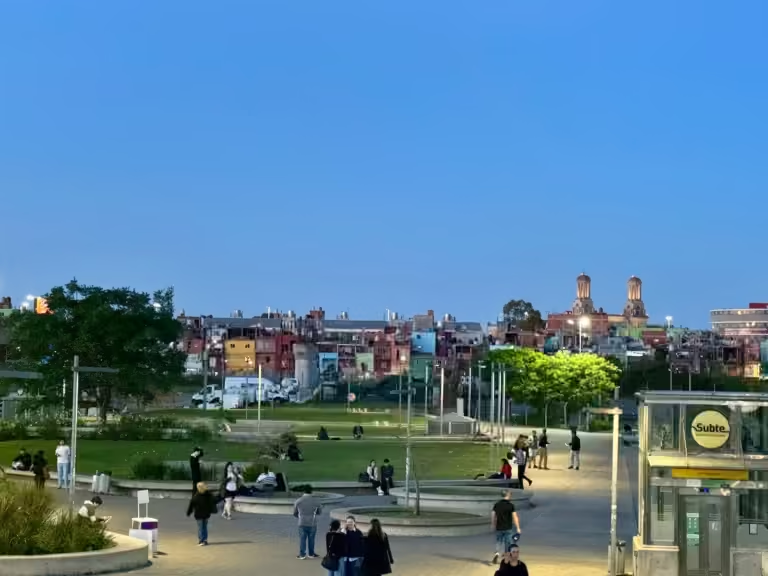
Once you arrive at Bartolomé Mitre, you have to exit the station and make a short, 2-to-3-minute walk across a pedestrian overpass that spans across Avenida Maipú. This bridge connects you directly to Estación Maipú, which is the official starting point for the Tren de la Costa.

🚨 Crucial Sunday SUBE Card Warning: If you are planning this trip on a Sunday, please note that the boletería (ticket office) at Maipú Station is usually completely closed. While there are automated machines to recharge your card, you cannot buy a new one here. Make sure you and your travel partners have your SUBE cards pre-loaded with plenty of funds before you leave the city center!
Step 3: Boarding the Tren de la Costa

From Estación Maipú, you will board the Tren de la Costa (the Coastal Train) and ride it all the way to its final stop, Delta Station, which drops you right in the heart of Tigre.
Honest Review: Is the Tren de la Costa Overrated?
Let’s address the elephant on the tracks: Is the Tren de la Costa actually scenic?
In my experience, no, it is highly overrated.
Travel blogs love to paint this as a breathtaking coastal journey, but the reality is much more mundane. For starters, the train cars can get incredibly packed, meaning you might find yourself waiting in long lines just to get on a train. Once you’re inside, the windows are frequently dirty, heavily obscuring whatever view you do have.
Furthermore, you don’t actually see much water. For about 90% of the trip, your view consists of standard suburban backyards, fences, roads, and trees. There are maybe two brief sections where you pass some beautiful, upscale houses, but nothing that justifies calling this a premium “scenic route.”
(To see exactly what this train transfer and “scenic or coastal train” look like in real-time, check out my step-by-step video walkthrough below!)
Better Alternatives: Faster, Easier Ways to Get to Tigre
Because the transfer at Maipú is a hassle and the coastal train doesn’t actually deliver on views, I highly recommend skipping it entirely. Depending on where you are staying in Buenos Aires, here are much better ways to reach the delta:
1. The Direct Mitre Train (Ramal Tigre) — The Best Option
Instead of heading to the Bartolomé Mitre branch, you want to catch the Línea Mitre (Ramal Tigre).
- Where to catch it: You can board this train directly from the main Retiro Station downtown, or from Belgrano C Station (right by Chinatown).
- Why it’s better: It is completely direct. There are no overpass transfers, no switching train lines, and it takes you straight into Tigre Station much faster than the coastal route. It uses the exact same SUBE card system and costs pennies.

2. The 60 Bus (Colectivo) — The Budget Nomad Route
If you want a rugged, hyper-local experience or aren’t staying near a train station, you can take the iconic 60 Bus.
- Where to catch it: The 60 bus line winds all the way through the city, with major stops along top tourist areas like Palermo and Belgrano. Look for the buses specifically marked with “Tigre” on the front windshield.
- Why it’s better/worse: While it takes longer than the train due to city traffic, it is incredibly convenient if you want to hop on a single bus close to your accommodation without navigating train terminals. Just tap your SUBE card when you get on!
Top Things to Do on a Tigre Day Trip
Once you survive the transit and step off into Tigre, the atmosphere completely transforms. It is an immediate breath of fresh air compared to Capital Federal. Here are the best ways to spend your afternoon:
1. Browse the Local Markets
Right outside the train station, you’ll run into bustling local artisan markets. They are filled with everything from handmade crafts and wicker goods to classic Argentinian souvenirs. It’s a fun, lively area to stroll through right as you arrive.
(Note: You will also pass Parque de la Costa, a massive local amusement park. If you’re traveling with kids, it might be worth a look, though it wasn’t quite my vibe!)

2. Walk the Paseo de la Victoria
To experience the true charm of Tigre, head over the bridge and begin walking along the Paseo de la Victoria. This is a gorgeous, wide pedestrian path that hugs the edge of the river. It takes about 15 to 20 minutes to walk the length of it, and it’s a completely different scene—peaceful, sunny, and lined with beautiful green spaces.

3. Spot the Historic European Rowing Clubs
As you walk the path, look across the river and pay attention to the grand buildings lining the banks. There is a massive English and European architectural influence embedded in Tigre’s history. Back in the early 1900s, European immigrant communities built elite rowing organizations here, like the stunning Club Canottieri Italiani and the Buenos Aires Rowing Club. You’ll also spot beautiful, historic Tudor-style houses tucked away behind the trees across the water.

4. Take a Ice Cream Coffee Break
Walking under the strong Argentinian sun will definitely have you looking for a shaded break. The waterfront path is lined with fantastic outdoor cafes and restaurants. We stopped at a local Italian gelato shop and ordered an affogato—a perfect scoop of rich vanilla ice cream drowned in a hot shot of espresso. Sitting by the docks, watching the classic wooden taxi boats and speedboats fly past on the water while sipping a coffee, is pure relaxation.

The Highlight: The Spectacular Museo de Arte de Tigre
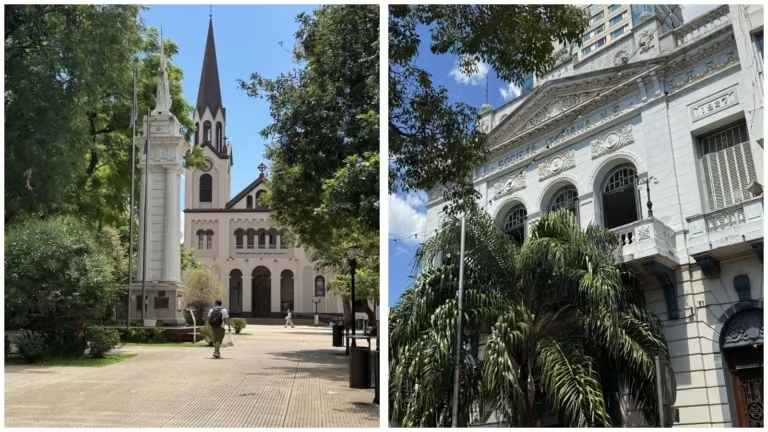
At the absolute end of the Paseo de la Victoria sits the crown jewel of the entire day trip: the Museo de Arte de Tigre (MAT). Even if you aren’t a massive art history buff, this building alone makes the entire trip to Tigre worth it. Seriously, I thought I was in France!

This architectural masterpiece was built in the early 20th century during Argentina’s spectacular Belle Époque era. During this time, the country was experiencing massive economic growth, and the local elite leaned heavily into French and European architecture to design their luxury social clubs.
Standing in the manicured gardens out front, looking up at the sprawling marble columns, grand arches, and European chandeliers, you will genuinely feel like you’ve been transported to the palace grounds of France. It is an absolutely beautiful area to sit on a bench, snap a picture in front of the iconic Tigre sign, and watch the sunset over the water.

Essential Survival Tips for Your Tigre Day Trip
To make sure your day goes flawlessly, make sure to keep these three practical rules in mind before you jump on the train:
- Rent a Boat Ride: Tigre is entirely defined by its river delta. While walking the paths is beautiful, the absolute best way to experience it is from the water. You can find dozens of options for traditional wooden commuter boats (lanchas colectivas) or catamaran tours right along the main docks.
- Arrive Early (And Pick the Right Day): Do not show up late on a Sunday afternoon. It gets incredibly crowded with locals coming out to lay down mantas (picnic blankets) by the riverbanks. If you want a peaceful, crowd-free experience, come early in the morning or visit on a weekday instead.
- Pack Heavy-Duty Bug Spray: This is non-negotiable! Because Tigre is a massive, humid river delta, the moment the sun begins to set in the evening, the mosquitoes and bugs come out in full force. Lather up on sunscreen during the day, but make sure you have strong insect repellent ready for the late afternoon. You can check out the best bug spray brands here.
Final Thoughts
Tigre is an absolutely phenomenal change of pace from the roaring streets of Buenos Aires. While the heavily praised “Scenic Train” fell flat and isn’t worth the extra transit headache, the actual town of Tigre completely delivered. Save yourself the trouble: take the direct Mitre Train from Retiro or Belgrano C, grab an affogato, and spend your afternoon marveling at the Belle Époque architecture by the water!
Related Argentina Guides
- Living in Buenos Aires review
- Is Buenos Aires safe for tourists?
- Buenos Aires Ultimate Travel Guide
- More free guides from Argentina
- Another day trip? Go to Colonia in Uruguay
Travel Resources
These are the tools and services I actually use for travel in Argentina and beyond:
✈️ FLIGHTS | Skyscanner is my go-to for finding the best fares
🚌 BUS TICKETS | Busbud for long-distance buses across Argentina – comfortable, affordable, and bookable in advance.
🚗 RENTAL CARS | Discover Cars to compare rental rates — essential if you want to road trip from Buenos Aires.
🏨 ACCOMMODATION | Booking.com has the widest selection for Buenos Aires.
📱 eSIM / DATA | Airalo is the easiest way to get data in Argentina without swapping SIM cards. Buy before you fly, activate on arrival.
🔒 VPN | ExpressVPN – I use this on café WiFi and for accessing home streaming services from Argentina.
🛡️ TRAVEL INSURANCE | SafetyWing — the Nomad plan is built for slow travelers and remote workers. Covers medical, travel emergencies, theft and more at very reasonable rates.
🎟️ TOURS & ACTIVITIES | GetYourGuide for Buenos Aires tours and guided experiences in the region.
Sean is a digital nomad and slow traveler writing about the places he actually lives in — not just passes through. nomadicsean.com